Photography
In any optical image sensor, raw measurements are shaped by spectral sensitivity, CFAs, exposure, optics, and noise, and the sensor cost trades with image resolution and SNR. This trade-off is bottlenecked by traditional ISP pipelines, where classical deblurring or demosaicing blocks discard precious information and downgrade the spatial-spectral resolution, particularly in the presence of motion blur or ultra-low-light. Reconstruct Anything Model 2 reconstructs machine-vision data directly from raw sensor measurements, enabling new forms of high spatial-spectral resolution imaging with cheaper, smaller cameras, without needing to retrain on any large paired training datasets.
Benchmark performance
See Gallery below for sample images
| PSNR (dB) (higher is better) | ||||
|---|---|---|---|---|
| Family | Task | RAM 2 | RAM 1(ICLR'26) | Task-specific model |
| Computational photography | Gaussian denoisingCBSD68 (σ=15) | 34.3 | 34.1 | 34.3Restormer |
| Poisson denoisingCBSD68 (gain=0.05) | 30.1 | 29.7 | 29.7Restormer + Ansc. | |
| Joint RAW demosaic, deblur & denoiseRAIM 2025 test | 36.6* | 34.2 | 33.9IIP-IR | |
| Blind motion deblurringKöhler | 28.7* | 21.8 | 28.3Blur2Seq | |
For blind problems where the physics is not fully known (e.g. noise level, blur PSF, coil maps), we report results with physics estimators trained in-house. Either use open-source estimators in DeepInverse ↗ or use them via Labs ↗.
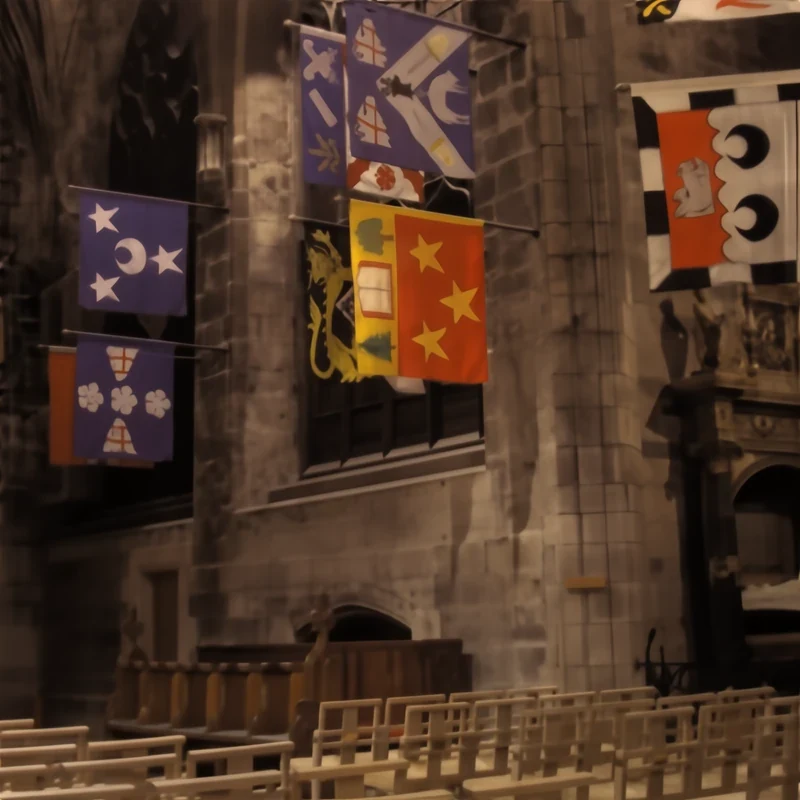
Blind motion deblurring
Source: Camera-shake acquired with Canon EOS 5D Mark II from Köhler dataset
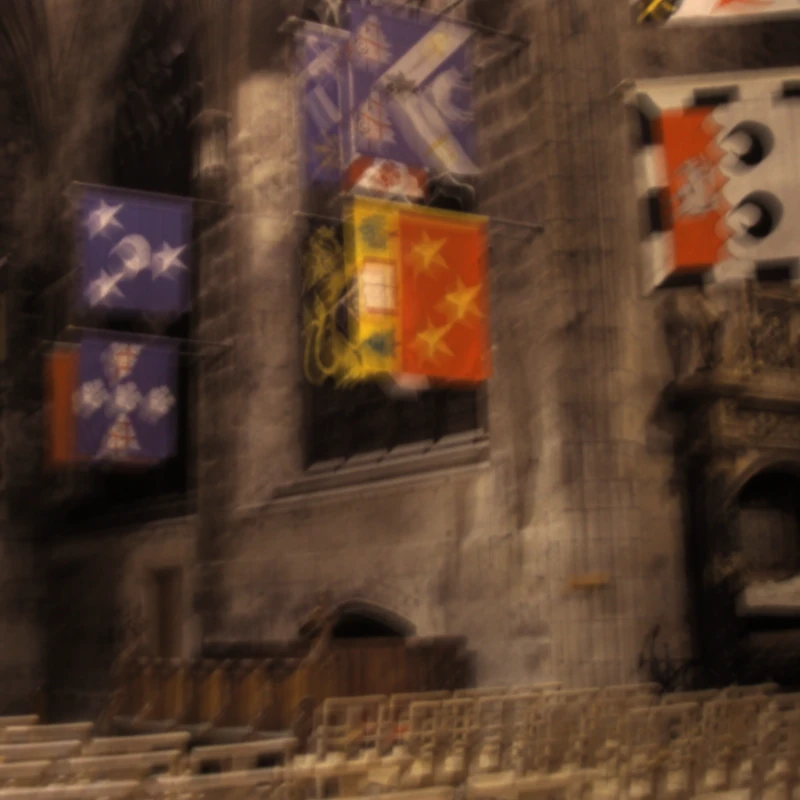
Joint demosaicing, deblurring & denoising for neural ISP